GoDigital Corporation
2018 to 2021
Okto was a revolutionary all-in-one digital wallet at the forefront of the Philippine digital payment landscape, catering specifically to gamers and consumers through bill payments, game top-ups, and money transfers. As an early product designer on the project, I shaped the ecosystem from the ground up—designing the mobile app, desktop interface, POSMs, and terminal hardware. My work directly supported Okto’s nationwide rollout across prominent internet cafes like Mineski Infinity, leveraging gaming communities and a targeted rewards model to drive rapid adoption.
UI/UX
Product Design
Branding & Identity

OKTO Launch in Manila
Company: GoDigital Corporation
Role: Multimedia Designer
Industry: FinTech, Gaming, & Esports
THE CHALLENGE
Digital payments were expanding across the Philippines, yet local gamers still lacked a financial tool built specifically for their needs. The objective was to tap into GoDigital’s tech ecosystem and Mineski’s established network to build a unified wallet experience. This meant designing across mobile, desktop, and physical POS terminals to turn everyday esports fans into active digital wallet users.
THE OPPORTUNITY
Partnering with one of Southeast Asia's biggest esports names offered a fresh challenge at the intersection of fintech and gaming. I was able to help pioneer GoDigital’s earliest suite of products, including digital wallets, physical POS hardware, and ecommerce platforms. This role expanded my creative reach across both digital product design and gaming-centric media.
THE WORK
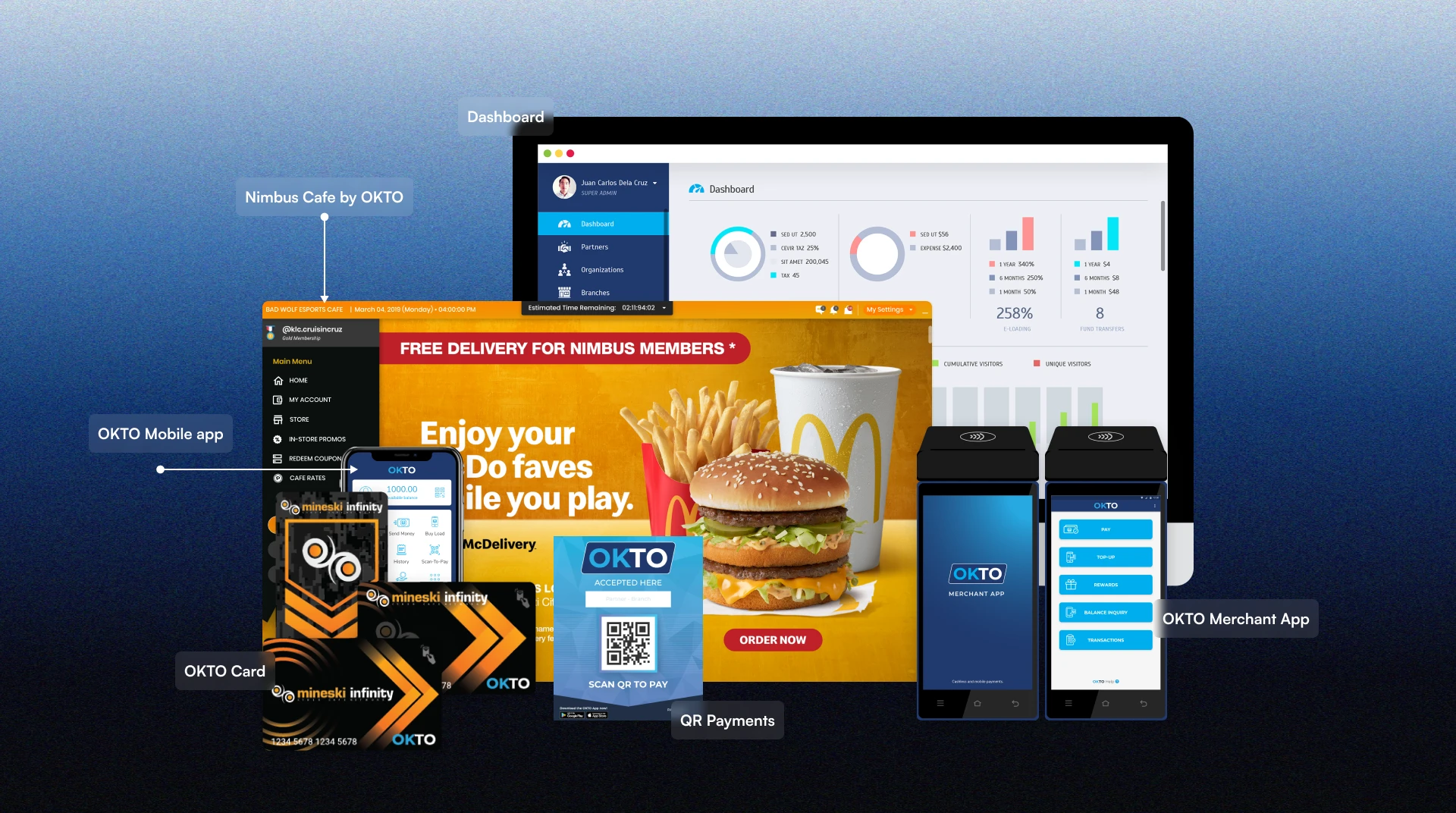
To capture the shift toward cashless payments in the Philippines, we analyzed top local e-wallets like GCash and Maya, using research insights to shape Okto’s unique product strategy. We drove early adoption by embedding OKTO into internet cafes, allowing gamers to use the OKTO card and app for PC rentals, in-game credits, and everyday transactions. To elevate the experience further, we partnered with major brands like McDonald's Philippines, integrating direct food ordering into cafe desktop dashboards so users could pay via OKTO and receive deliveries right at their gaming stations.
KEY PROJECTS
OKTO
Helping micro, small, and medium enterprises on their digital transformation.

OKTO
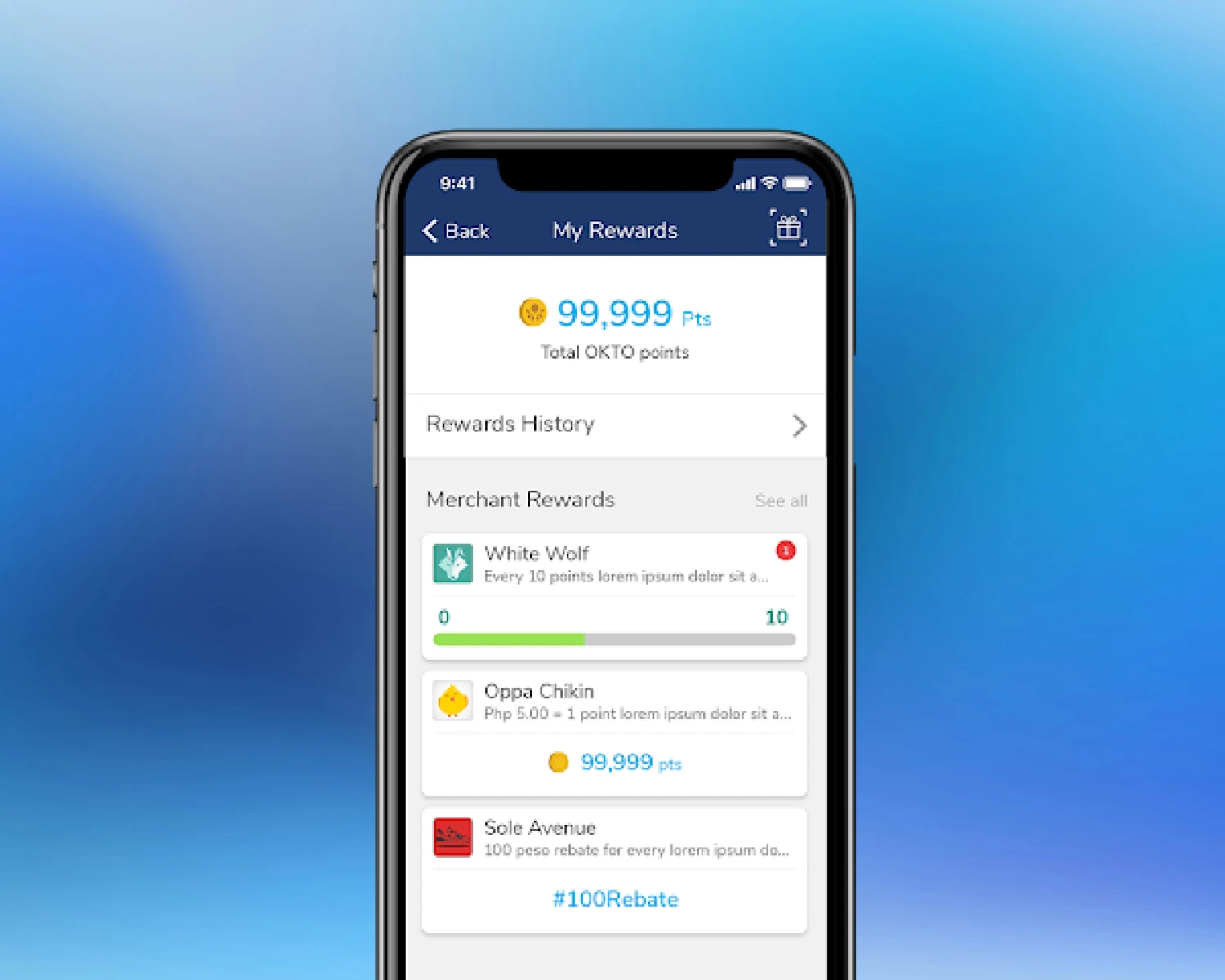
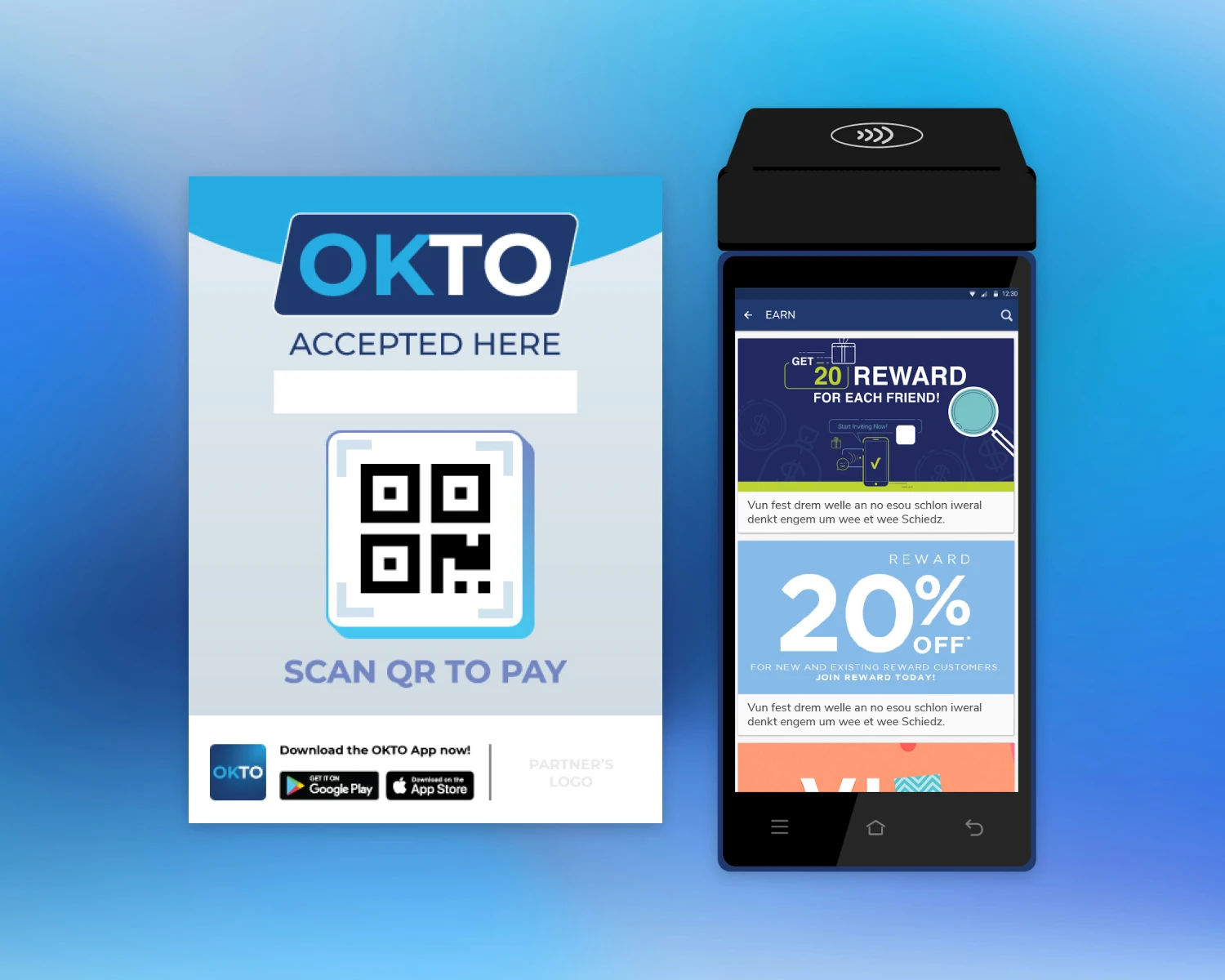
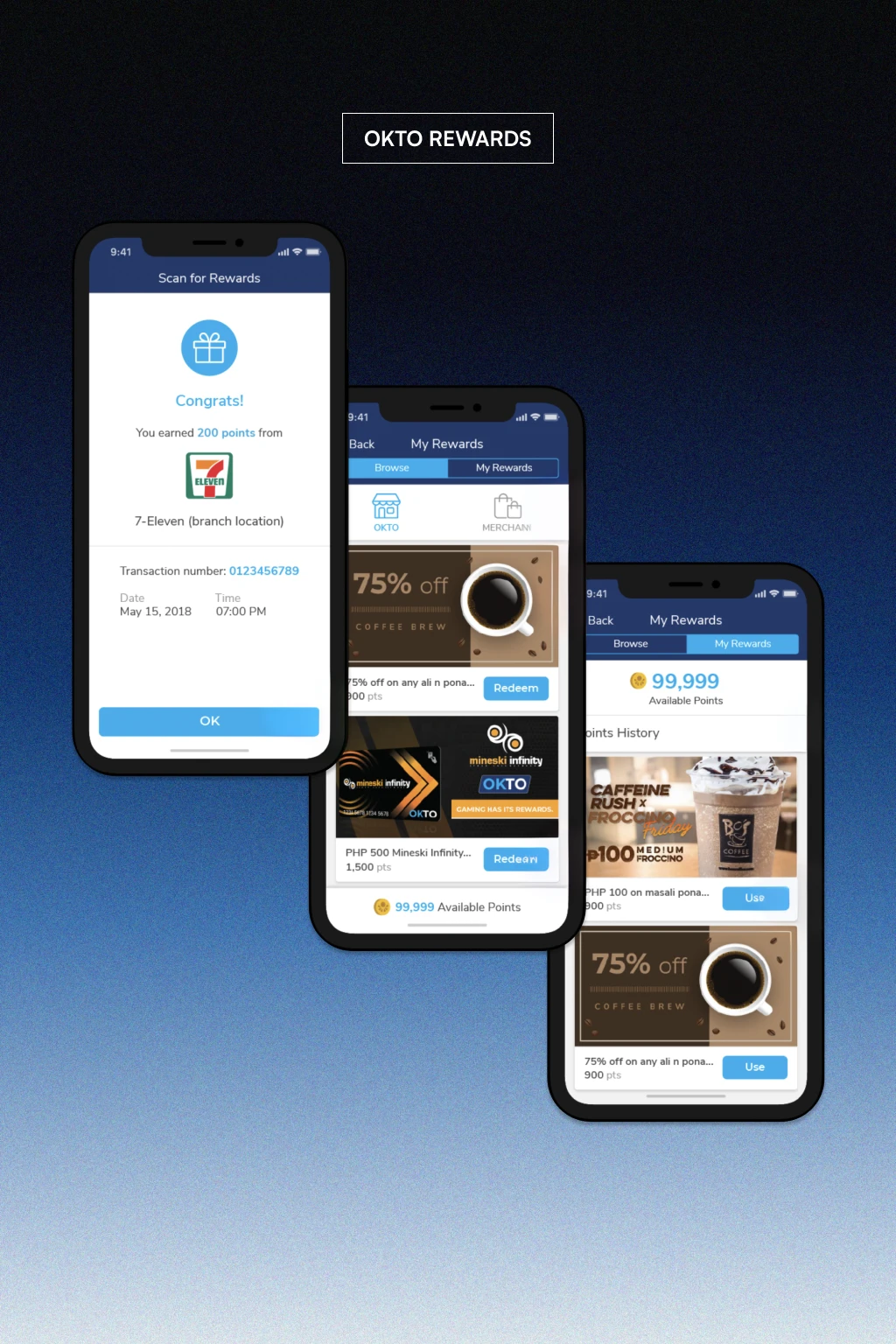
Okto is an all-in-one e-wallet platform built for Filipino SMEs and businesses, covering payments, bills, fund transfers, promos, and rewards all under one roof. I was part of the core pioneer team that built it from the ground up, which meant being involved in decisions that shaped not just how it looked, but how it actually worked. This is where I really grew as a designer. The work sharpened my critical thinking around features, specs, and product models, pushing me to think beyond the interface and consider the real impact on both the business and the people using it. It was also the era before Figma took over the world. We designed UIs in Photoshop, Illustrator, Balsamiq, and InVision. Working through those constraints made me a sharper and more adaptable designer when the tools eventually caught up.

01
Launched the Okto Ecosystem
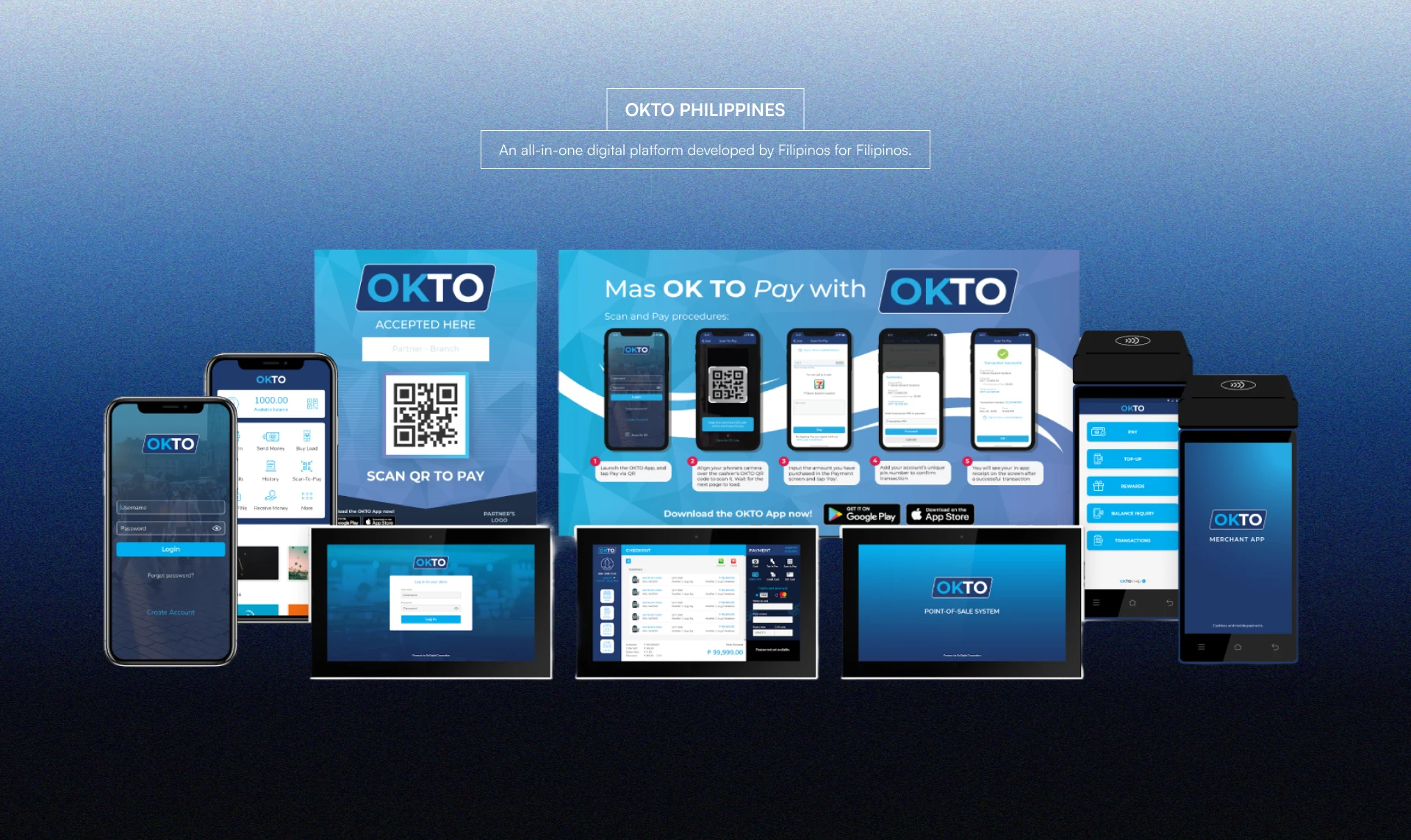
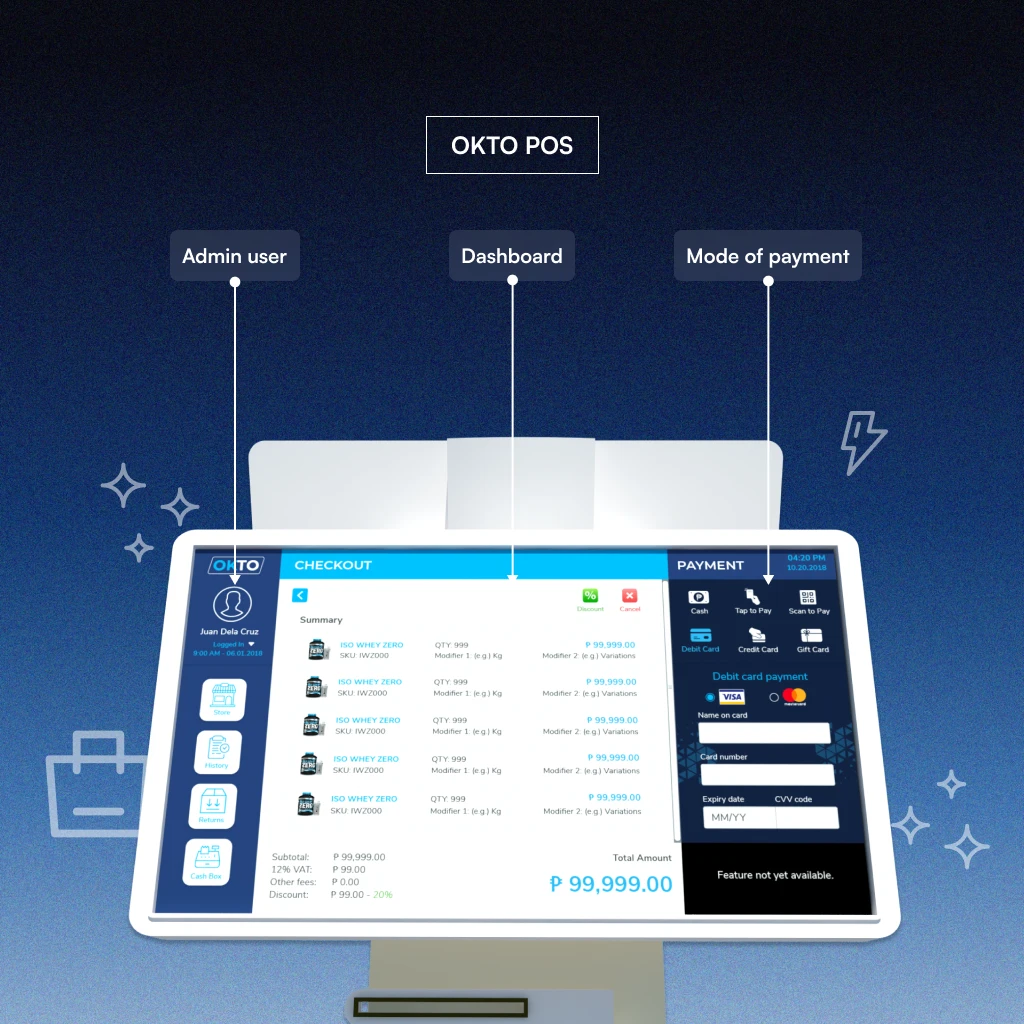
We built and launched the full Okto ecosystem from scratch — mobile app, merchant app, POS, and super user dashboard — with a lean, all-Filipino team. Beyond the product itself, we took it on the road, running showcases and roadshows to show SMEs, particularly internet cafes across the Philippines and parts of Southeast Asia, exactly how Okto could work for their businesses.
02
Launched Nimbus for Mineski Internet Cafes across SEA
Nimbus is a cloud-based POS system built for internet cafes, powered by Okto. It let customers pay for airtime, gaming credits, mobile load, snacks, and in-cafe products directly from their seat using the Okto app or Okto card. No queuing, no front desk trips, just open the dashboard and go. It was a small change in experience that made a big difference for how cafes operated day to day.
03
Led the Figma Transition
I initiated and led the shift from legacy design tools to Figma across the product team. That meant running knowledge transfer sessions, getting everyone comfortable with the platform, and setting up a workflow that made design handoffs to development faster and a lot less painful.
what i learned
The project that raised my standards permanently.
Okto was one of those projects that just keeps giving, and not always in the easy way. Problems were constant, the scope kept growing, and the pressure to ship quality work never let up. But that’s exactly what made it valuable. It pushed the team to collaborate more intentionally, raise the bar on craft, and find smarter ways to solve harder problems. Looking back, the stretch was the point.
What I’d Do Differently
Building for resilience from the start
Okto was built for a world that the pandemic temporarily paused. Looking back, I wish we had explored contingency design strategies earlier. What if we had mapped out scenarios where our core market, internet cafes and on-ground events, suddenly became inaccessible? Designing for uncertainty is something I now carry into every project I take on.
Understanding the business model more deeply
Working in a capital-intensive startup during a downturn taught me that great design alone cannot save a product when the business fundamentals are under pressure. I wish I had spent more time understanding the acquisition model, the investor landscape, and how design decisions connect to revenue. That kind of business literacy would have made me a much sharper contributor at the table.
Advocating for the user when external pressure is highest
When the pandemic shifted priorities across the board, user experience decisions sometimes had to take a back seat to survival decisions. What I took from that is advocacy for the user is hardest when the business is under the most stress, and that is exactly when it matters most. It is a muscle I am still actively working on.